Designing Innovation Districts
I co-founded Aretian Urban Analytics and Design based on the research from my master’s thesis at Harvard University.
I created a recommendation system for the development of a new innovation district. The new campus, focused on fostering a startup ecosystem, would help grow the local economy by attracting new industries, and support technology transfer, turning academic research into new companies.
The product was a data pipeline, which analyzes a city’s economy, academic research production, and urban form to recommend new industry growth, strategic tech transfer programs, and improved urban conditions, placemaking, and access to amenities and transportation systems.
Below is a case study for The City of Barcelona to redevelop an old warehouse district into a modern innovation district.
Summary
Designed and built Aretian’s analytical method based on original research.
Worked closely with clients to deliver custom economic and urban design plans.
Led a team of 5 to deliver 27 projects worldwide.
Description
Context
Barcelona wanted to replace an old warehouse district with a new innovation campus, but the path forward was unclear given the changing economy. The city had strong assets in research, startups, and the 22@ district, but no rigorous map to evaluate the current state of the economy, and no evidence base for where to invest for the most leverage to grow the economy, and achieve the highest best use for the neighborhood.
Approach
The team and I ran three main analysis:
- An economic complexity analysis to find the highest-value, related industries to populate the new campus.
- A network-graph analysis of university research collaborations to find top research performers and surface tech-transfer gaps to foster the innovation ecosystem.
- An urban form analysis to measure the surrounding urban form and concentration of amenities to set the district's physical design criteria to create a thriving, livable neighborhood.
Deliverables
The combination of the three analyses created the deployment strategy: an innovation pipeline and a site-specific district design, which included a ranked set of target industries, five anchor clusters each matched to a real research department, and a campus layout sized to the 20,000+ knowledge-worker threshold the analysis identified as critical mass. I managed a team of five and the client relationship to deliver the project.
For detailed case study: Click Here
Gallery
More projects
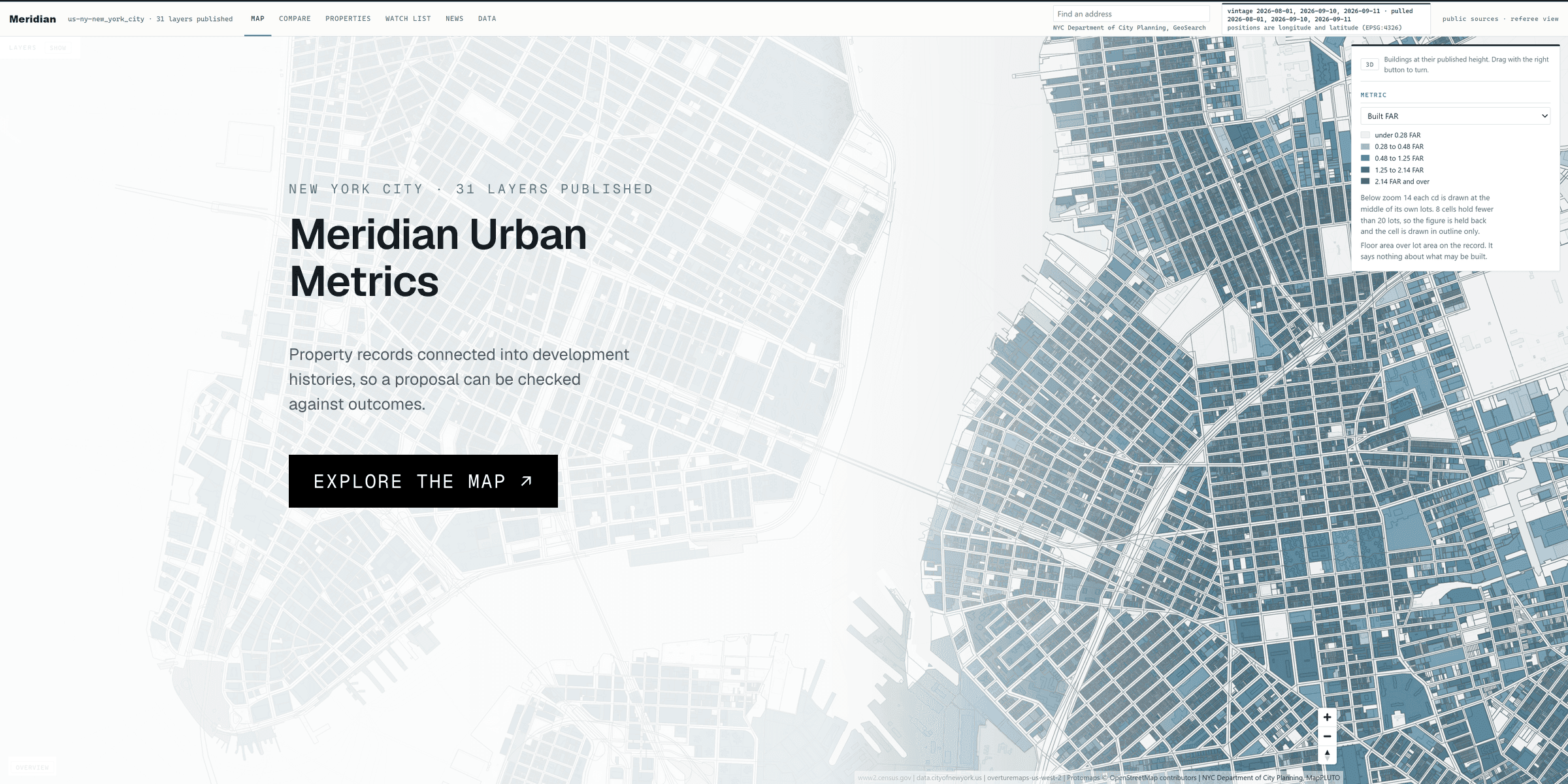
Meridian Urban Metrics
A forward-deployed engineering platform for real-estate development and investment analysis, built on a reusable historical data and modeling layer.
Data · Economics · Urbanism · 2026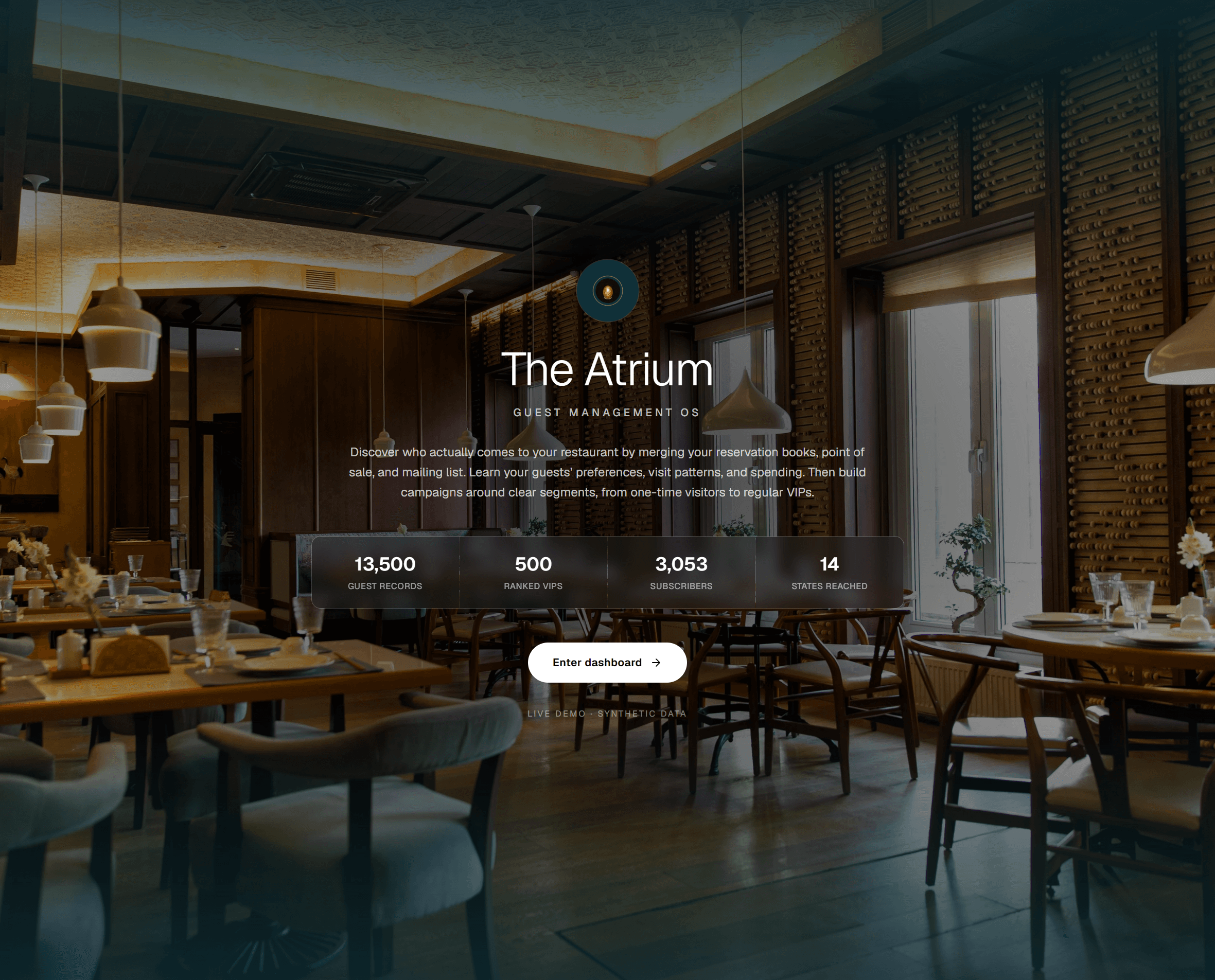
Guest Intelligence Dashboard
A five-day onsite sprint merging 44,874 guest records from four disconnected systems into a single source of truth, with a dashboard to read guest profiles.
AI · Business · 2026