Mnemo Atlas
A catalog of culture built around connections: not only what we know about something, but how it relates to everything around it, and where that connection comes from.
For the full documentation, see the documentation page.
Summary
Finding a common structure
I studied how more than twenty fields catalog their worlds, from architecture, film, and fashion to philosophy, machine learning, and political thought. I was looking for the structures they had in common: what each field considers a thing, which facts it records, and how it describes relationships.
Making connections part of the data
From that research, I built a PostgreSQL database where a relationship is more than a link between two records. It can have its own meaning, direction, explanation, and sources. Facts and connections can be traced back to evidence, while conflicting interpretations can exist side by side.
Exploring the same knowledge from different angles
I designed and built an application that turns those records into a catalog, timeline, map, scatter plot, network, comparison tool, and personal library. Each view reveals something different from the same underlying data: what happened at the same time, what happened nearby, what shares an attribute, and what influenced, opposed, contained, or caused something else.
Description
Context
The idea
I built Mnemo to better understand how cultural work is interconnected. The original idea was similar to Six Degrees of Kevin Bacon: if two things seem unrelated, what chain of people, ideas, events, places, and objects connects them? The individual facts are usually easy to find, but the relationships between them are scattered across books, articles, museum collections, databases, and personal notes. Wikipedia can tell you that another page is relevant, but a hyperlink does not necessarily explain what the relationship is, why it matters, or what evidence supports it.
Mnemo is designed around that missing layer. It focuses on defining the links and displaying the metadata, while maintaining a relatively short description and links to external sources for complete information. A claim that one work influenced another can carry a description, direction, and citation; if sources disagree, both interpretations can remain visible.
Technical details
The project began with more than twenty field studies covering areas such as architecture, film, fashion, philosophy, technology, and political thought. Each study asked the same questions:
- What does the field catalog?
- Which relationships matter?
- Which identifiers and vocabularies already exist?
- Which facts can be structured?
- And where does interpretation begin?
The research showed that very different disciplines repeatedly rely on similar underlying ideas. Rather than invent a new vocabulary for every field, I looked for the smallest common structure that could still preserve meaningful differences.
That principle also shaped the sourcing model. Mnemo is not intended to replace resources such as Wikidata, Getty vocabularies, museums, libraries, or specialist publications. It uses those systems as references while adding a layer for comparing and connecting records across disciplines.
The central design decision is that a relationship is itself a record. A connection is not simply an edge drawn between two things; it can carry its own verb, direction, explanation, subtype, provenance, and evidence. This allows the database to preserve contested or competing claims rather than silently reducing them to one answer.
Approach
One database structure, many ways to explore it
A building, a person, a film, and a political movement do not have the same attributes, but they can still participate in the same larger system. I designed Mnemo around one shared entity model so that very different records can be compared and connected without pretending they are identical.
The same collection can then be viewed through time, geography, measurable attributes, or relationships. There are multiple ways to view the data:
- The catalog helps when you know what you are looking for
- The timeline reveals historical overlap
- The map shows geographic proximity
- The scatter plot compares attributes
- The network exposes chains of connection
- The comparison view places any two records directly beside one another.
Users can also create personal collections and see how their own interests connect to the wider catalog and discover new relationships through the databases inherent connections.
Technical details
Every entity shares a small set of fields the application needs everywhere: name, description, dates, location, identifiers, and timestamps. A separate many-to-many type system records whether something is a person, building, product, movement, work, or one of sixteen supported record types. An entity can carry more than one type when necessary.
Facts that vary between types live in a flexible attributes field. A building might have height and floor count, while a vehicle might have horsepower and payload. Each entity type has its own Zod schema, so those attributes are validated before a record is written. The database remains flexible, while the application still enforces what valid data looks like.
This avoids two less useful extremes: maintaining a separate table for every type, which would make cross-field relationships difficult, or creating one enormous table containing hundreds of fields that apply only to a few records. With one shared entity ID, a building can connect directly to a film, person, product, or philosophy, and every visualization can query the same underlying records.
The relationship system follows the same principle. Research across twenty fields produced six core relationship families:
- Influence
- Part of
- Similarity
- Co-occurrence
- Opposition, and
- Cause.
They are families rather than the entire vocabulary. Mnemo currently supports fifteen relationship verbs, with more specific relationships such as created, derived from, named after, and discovered by being able to sit beneath broader categories.
The six remain separate because they behave differently.
- Influence and part-of are directional;
- similarity, co-occurrence, and opposition work in both directions;
- part-of can form hierarchies; and
- cause is directional and must also record whether its effect is positive or negative.
Not every verb is forced underneath a core family. Preceded by, for example, remains distinct because succession does not necessarily imply influence.
Keeping the core small makes cross-disciplinary questions possible. "What influenced this?" can return relevant relationships across architecture, film, technology, and philosophy without requiring the user to know each field’s preferred terminology.
Automation can suggest new records and connections, but generated content does not enter the catalog automatically. It goes through a human review queue where the evidence is checked before approval. Entity writes also pass through one validated path, with automated tests guarding against code that bypasses the model. That friction is intentional: the challenge is not collecting the largest number of records, but deciding whether the structure and evidence around each connection are strong enough to keep.
Deliverables
The product
Mnemo is a live development preview built around a searchable cultural catalog and several ways of exploring the same underlying collection. Alongside the catalog are timeline, map, scatter plot, network, and comparison views, as well as personal collections and a story reader that links narrative passages back to the underlying records.
The plan is for the collection to grow steadily based on interest and testing edge connections. If it grows too quickly it will become difficult to manage. I want to prevent this and get the best suggestions, advice and collaboration for the site now that it is live.
Technical details
The underlying model currently includes:
- 16 entity types sharing one core record structure
- 15 relationship verbs organized around 6 core relationship families
- Source attribution for both individual facts and relationships
- PostgreSQL and PostGIS for relational and geographic data
- Zod schemas for type-specific validation
- Import and moderation tools for reviewing proposed records and connections
- Automated integrity checks around the database and write paths
- 21 research reports covering twenty subject areas
- A cross-field comparison matrix used to develop the ontology
- A growing set of written decision records documenting why the model works the way it does
The architecture is designed so that the system can grow mostly through data rather than code. A specific concept such as Brutalism can be added as a record or classification rather than becoming a new database type, while genuinely new structural requirements can be introduced deliberately when the existing model no longer holds.
Gallery
More projects
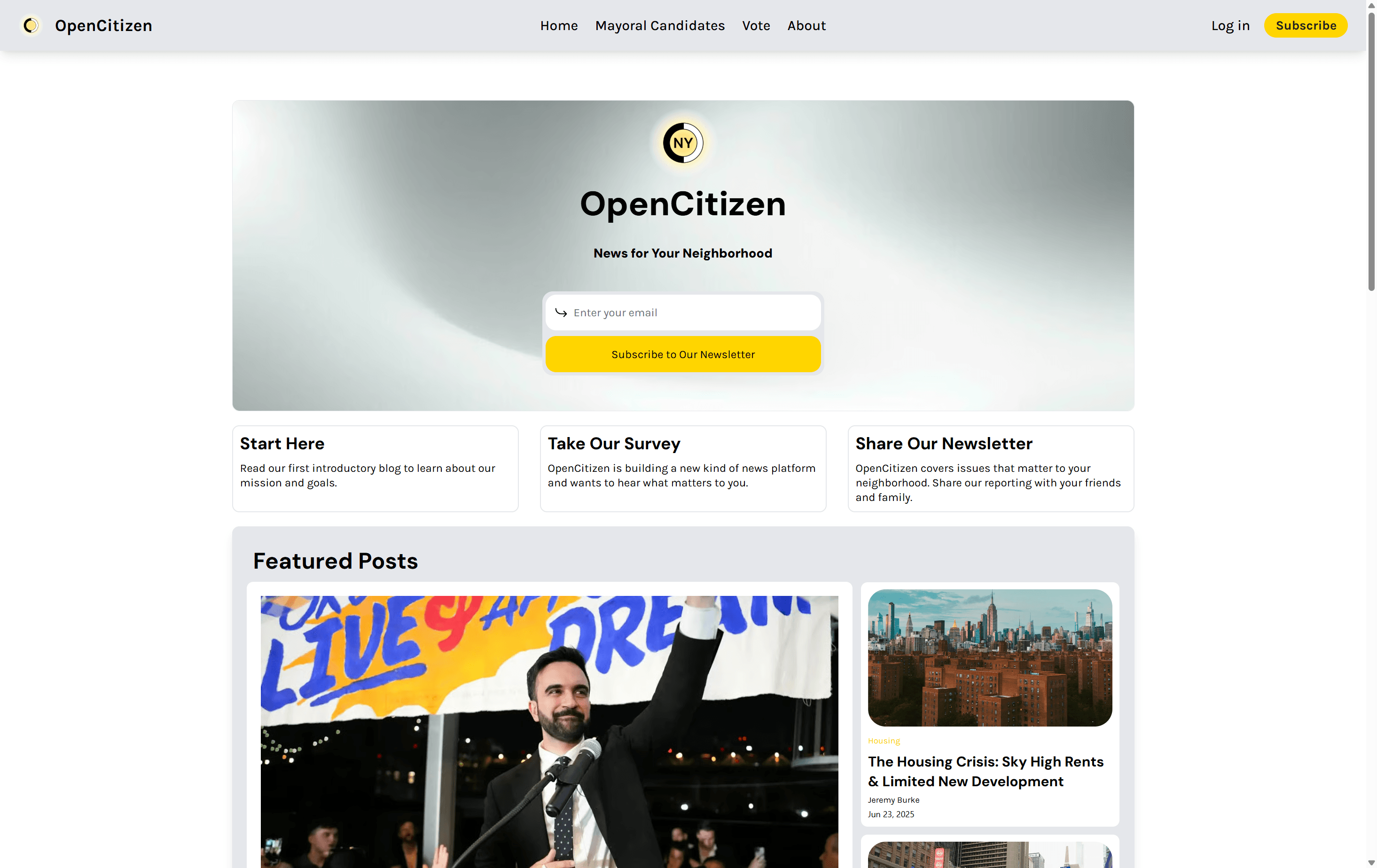
OpenCitizen
A prototype focused on the 2025 NYC mayoral primary, informing voters of each candidate’s policy proposals through simple, comparable reporting.
AI · Data · 2025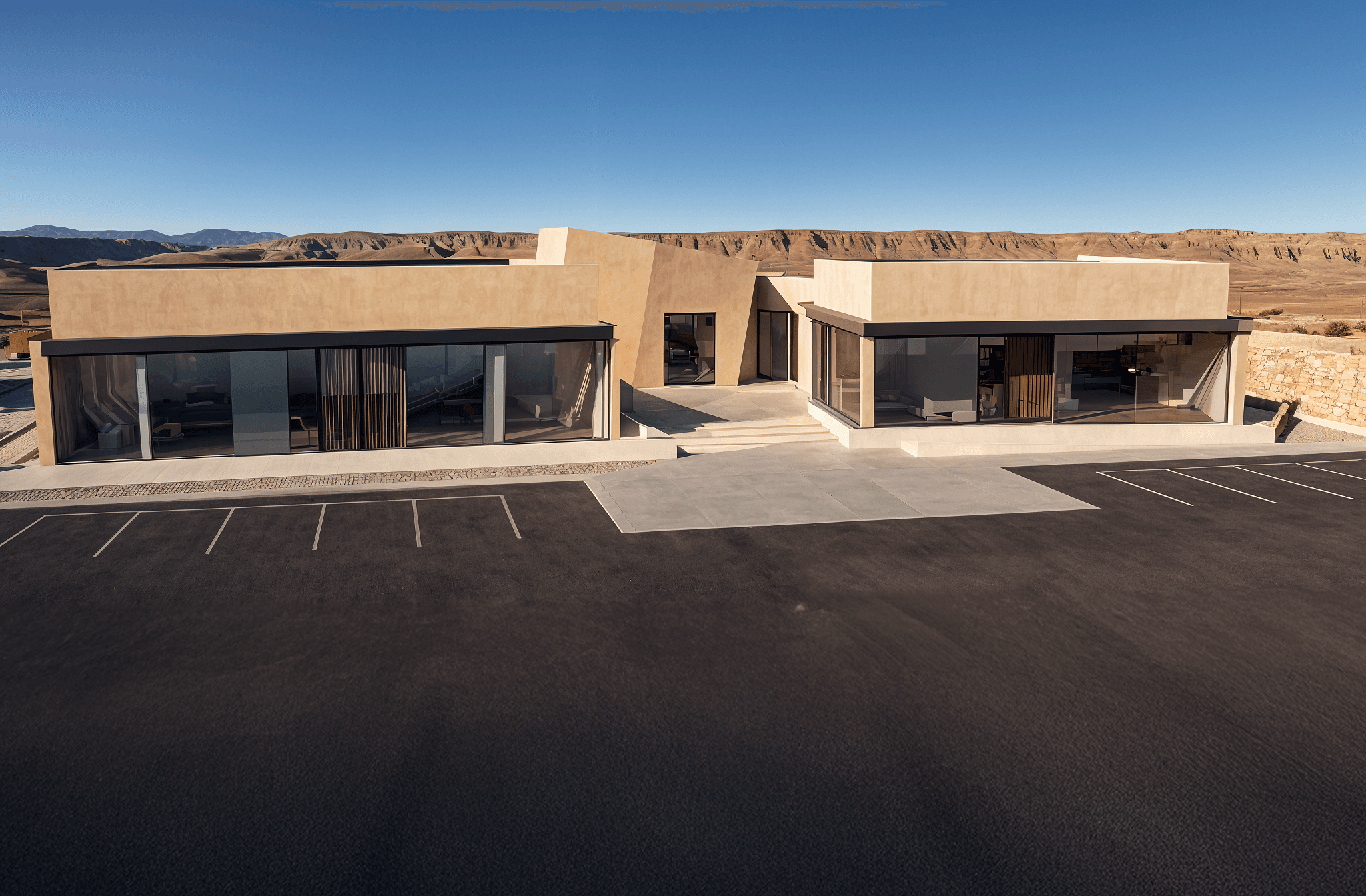
Native Catalyst Community Center
The architectural program was derived from studies of space utilization in co-working spaces, geospatial analysis for site location, and regional architectural styles. The result is a community hub with financial services, a cafe, a convenience store, and local programming.
Architecture · Urbanism · 2024